Realbolt Engineering Industries is a leading manufacturer and supplier of precision-engineered bolts designed to meet the toughest industrial standards. With over three decades of experience, we specialize in producing a wide range of industrial bolts for demanding applications across the Oil & Gas, Petrochemical, Construction, Automotive, and Heavy Engineering sectors.
Our bolts are manufactured using high-quality raw materials and advanced forging and machining techniques, ensuring durability, strength, and dimensional accuracy. Available in various materials, sizes, threading types, and coatings, our bolt solutions are built for reliability and long-term performance in corrosive, high-pressure, and high-temperature environments.
Realbolt Engineering Industries offers a wide variety of industrial bolts available in different types, sizes, materials, and thread configurations to meet global standards and application requirements.
| Specification | Details |
|---|---|
| Standards | ASTM A193, ASTM A307, ASTM A325, ASTM A490, ASME B18.2.1, ISO 4014, ISO 4017, DIN 931, DIN 933, BS 3692 |
| Sizes | M6 to M100 | 1/4" to 4" (Custom sizes available on request) |
| Thread Types | Metric, UNC, UNF, BSW, BSF, ACME, Left-Hand Threads |
| Types | Hex Bolts, Heavy Hex Bolts, Carriage Bolts, Flange Bolts, U-Bolts, Eye Bolts, J-Bolts, Anchor Bolts |
| Lengths | 10 mm to 1500 mm | 3/8" to 60" |
| Head Styles | Hex, Square, Round, Flat, Socket, T-Head, Dome |
| Coatings | Plain, Zinc Plated, Hot Dip Galvanized (HDG), PTFE Coated, Xylan, Black Oxide |
| Certifications | EN 10204 3.1 / 3.2, NACE MR0175, RoHS Compliance, Third-party Inspection Available |
Hex bolts, also known as hex cap screws or hex head bolts, are one of the most commonly used types of bolts in the fastening industry. They feature a six-sided head designed for use with a wrench or socket, providing excellent grip and torque. These bolts are ideal for high-strength fastening applications and are widely used across multiple industries due to their durability and reliability.
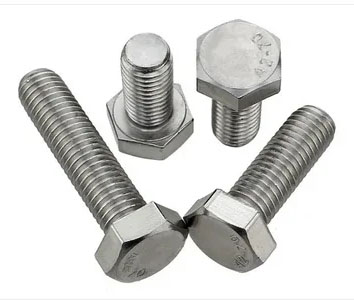
Heavy hex bolts are similar to standard hex bolts but come with a larger head and a thicker shank, providing enhanced strength and durability. These bolts are typically used in high-load and structural applications where additional clamping force is required. Their larger dimensions make them suitable for heavy-duty fastening in demanding environments such as construction, wind towers, and industrial machinery.
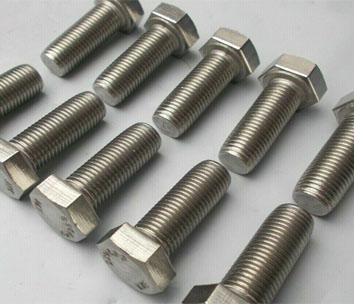
Hollow hex bolts are designed with a central cavity running through their length, making them lighter in weight while maintaining adequate strength for many applications. These bolts are ideal for use in systems where weight reduction is critical or where bolts are used to route fluids, cables, or other elements. The hexagonal head allows for easy tightening using standard tools.
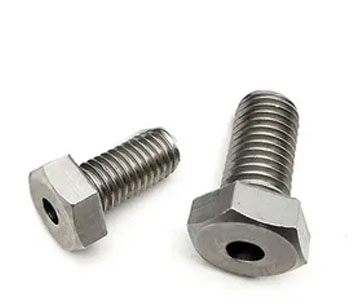
Hollow Allen bolts, also known as hollow socket head cap screws, feature a cylindrical body with an internal hex drive and a hollow center. These bolts are designed for weight-sensitive assemblies or specific engineering requirements such as airflow, wiring paths, or fluid passage. The internal Allen drive allows for a clean and compact appearance with excellent torque capability.
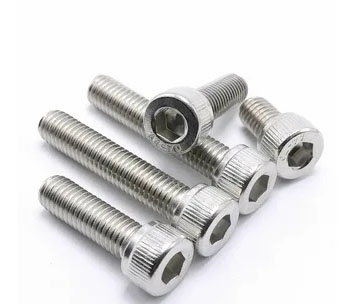
Machine bolts are heavy-duty fasteners with a square or hexagonal head and a uniform thread along the shaft. Designed for secure fastening in metal-to-metal or metal-to-wood connections, they are commonly used in construction, machinery, and equipment assembly. These bolts are typically used with a nut and washer for secure clamping and precise tightening in industrial applications.
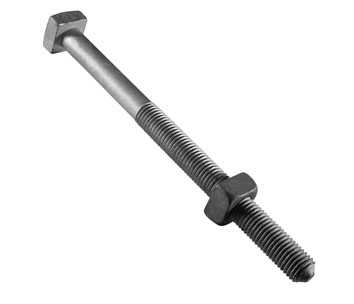
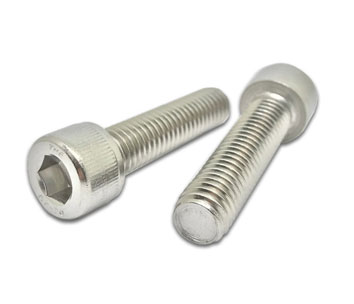
Socket head bolts, also known as socket head cap screws, feature a cylindrical head with a recessed hexagonal drive. These bolts are widely used in precision machinery, automotive, and aerospace applications where space is limited, and a clean, flush finish is required. The internal hex drive allows for higher torque applications compared to standard bolts without the risk of stripping.
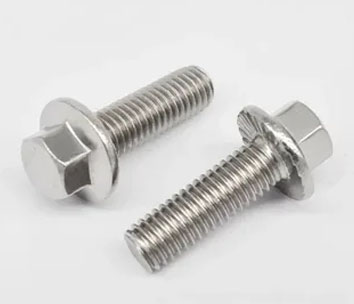
Hex flange bolts are hex head bolts with an integrated washer-like flange at the base of the head. The flange provides a larger bearing surface that distributes the clamping load more evenly, reducing the need for a separate washer. These bolts are ideal for automotive, machinery, and structural applications where vibration resistance and secure fastening are essential.
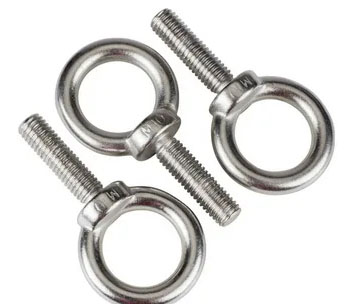
Eye bolts are mechanical fasteners with a looped head designed to attach a securing eye to a structure, allowing ropes, cables, or chains to be tied to them. These bolts are commonly used in lifting and rigging applications, as well as in construction and marine environments. Eye bolts are available in both shoulder and plain patterns to suit angular or straight-line pull requirements.
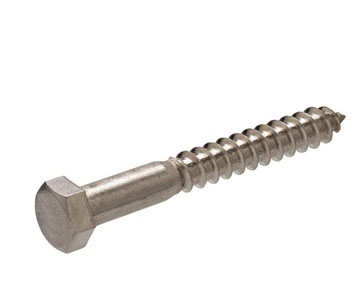
Lag bolts, also known as lag screws, are heavy-duty fasteners designed for wood-to-wood or wood-to-metal applications. They feature a hex head for wrench tightening and a coarse, deep thread that provides excellent grip in timber and other soft materials. Commonly used in construction, decking, and structural applications, lag bolts offer strong load-bearing capacity and long-lasting performance.
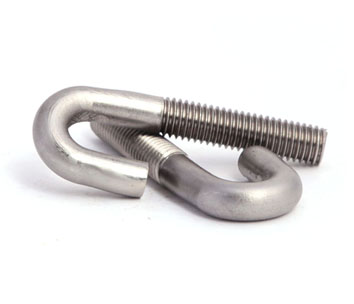
J Bolts are bent anchor bolts shaped like the letter “J” and are primarily used to secure structural supports to concrete foundations. The curved end provides strong anchorage once embedded in concrete, making them ideal for applications in construction, pole mounting, and heavy-duty structural installations. These bolts are typically used before the concrete is poured, ensuring firm anchoring of steel columns, plates, or equipment bases.
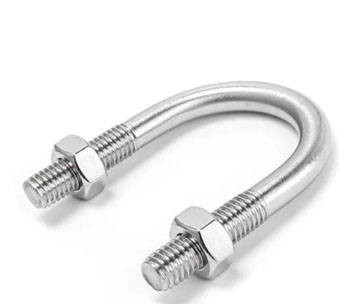
U Bolts are curved bolts shaped like the letter “U” with threads on both ends, primarily used to support pipework, secure round objects, or attach components to poles and beams. Their design allows for a firm grip around cylindrical shapes, making them ideal for plumbing, construction, and automotive suspension systems. U Bolts are commonly paired with plates and nuts to ensure stable clamping and load distribution.
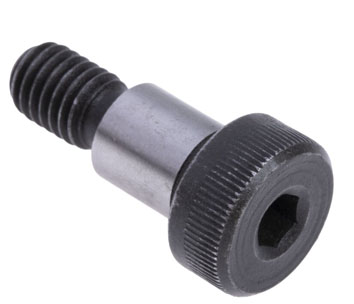
Shoulder bolts, also known as stripper bolts or shoulder screws, are precision fasteners with an unthreaded shoulder section between the head and the threads. The shoulder allows for rotation or sliding of attached components, making them ideal for use in pulleys, gears, and machinery assemblies. These bolts are commonly used in tooling, die sets, automotive, and mechanical engineering applications where alignment and pivoting are necessary.
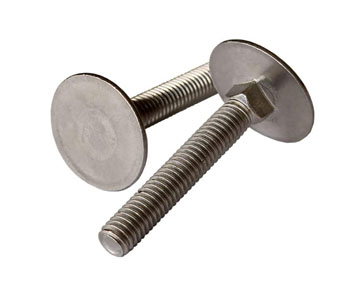
Elevator bolts are specialized fasteners with a large, flat countersunk head and a square neck underneath to prevent rotation during tightening. They are primarily used in conveyor systems, grain elevators, and other bulk material handling systems where smooth surfaces are needed to minimize wear and tear on belts. The wide head distributes load evenly and helps prevent pull-through, making them suitable for soft or thin materials.
Hanger bolts are dual-threaded fasteners with wood screw threads on one end and machine threads on the other. They are designed to anchor objects to wood or other soft materials while providing a secure machine-threaded end for attaching metal components, brackets, or equipment. Hanger bolts are commonly used in furniture assembly, electrical installations, and mounting systems where no through-hole is available.
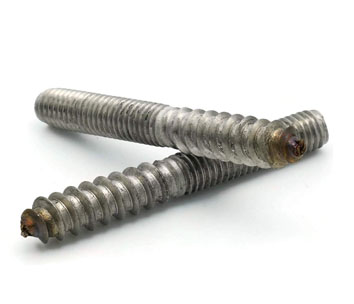
Carriage bolts, also known as coach bolts, feature a smooth, domed head and a square neck beneath it. The square section grips into the material to prevent the bolt from turning when the nut is tightened. Commonly used in wood-to-wood and wood-to-metal fastening, carriage bolts offer a clean, tamper-resistant appearance on one side and are widely used in construction, furniture, and outdoor applications.
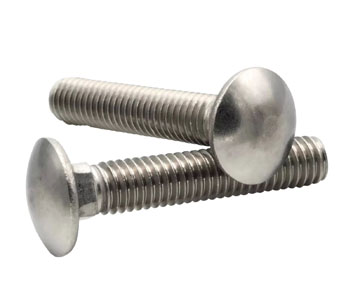
Allen bolts, also known as socket head cap screws, are precision-engineered fasteners characterized by a cylindrical head and a hexagonal drive hole, designed to be driven with an Allen wrench or hex key. They are commonly used in machinery, automotive assemblies, and precision equipment where space is limited and high torque is required. Their internal drive allows for a clean finish and reduces the risk of slippage during installation.
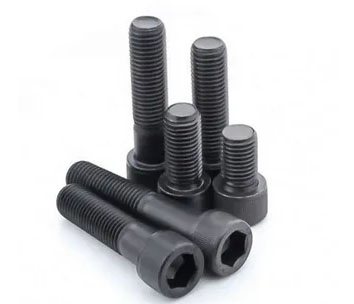
Anchor bolts are specialized fasteners used to attach structures or machinery to concrete surfaces. They are embedded in concrete and used to support structural loads, making them essential in construction, industrial foundations, and heavy equipment installations. Anchor bolts come in various styles such as L-shaped, J-shaped, or fully threaded rods with nuts and washers, depending on the application and load requirement.
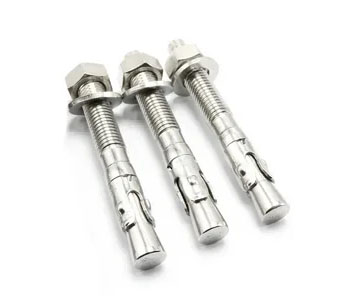
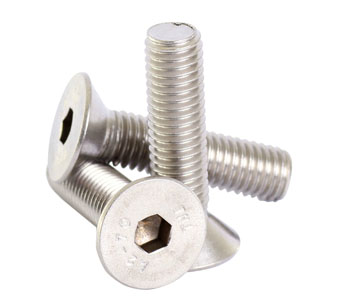
Countersunk bolts, also known as flat head bolts, are designed with a conical shape under the head, allowing them to sit flush with the surface of the material being fastened. These bolts are ideal for applications where a smooth, flush surface is needed, such as in carpentry, woodworking, and electronics. The countersunk design prevents snagging or protrusion of the bolt head, providing a neat and finished look.
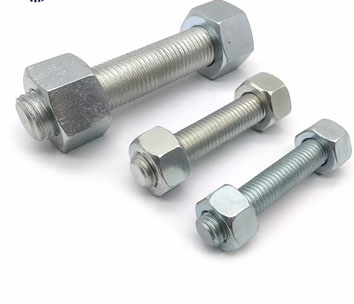
Stud bolts are a type of fastener characterized by a long rod with threads on both ends, commonly used in construction, mechanical, and piping systems. They are designed for applications where both sides need to be fixed with nuts or other fastening elements. Stud bolts offer the advantage of adjusting the length and securing connections on both sides, commonly used in flanged joints and high-stress applications such as engines and turbines.
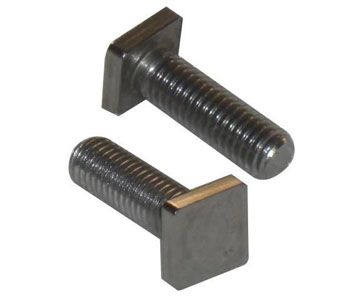
Square head bolts are fasteners with a square-shaped head, which provides a larger surface area for gripping. This design makes them ideal for use with a wrench or pliers, especially in applications where access is limited or a secure grip is required. Square head bolts are often used in applications such as construction, outdoor equipment, and woodwork, where high torque and durability are needed.